Becoming an educator with the VTCT Level 3 award in Education and Training
What is the VTCT Level 3 Award in Education and Training?
The VTCT Level 3 award in Education and Training is an internationally recognised teaching qualification recognised by sectors providing further education training. It is the minimum qualification required to teach the subjects that you are qualified in.
What are my career options with the qualification?
When you achieve the VTCT award in Education and Teaching you will be able to teach in the subjects that you are qualified in. Career options include working as a lecturer within a private or further education college, becoming a freelance teacher or working for yourself, providing your own training.
Are there any prerequisites for the course?
There are no prerequisites for the course. The course is open to all students wanting to embark on a career in teaching further education. The qualification is not specific to the Beauty industry, we welcome students from all sectors and industries.
What is covered in the course?
The course is designed as a foundation course into further education teaching. It covers the generic teaching skills required to be an effective teacher through the following units:
Understanding roles, responsibilities and relationships in education and training
Understanding and using inclusive teaching and learning approaches in education and training
Understanding assessment in education and training
How is the course delivered?
This is a distance learning course offering you the flexibility to work around your current commitments. most students complete their course within 12-16 weeks.
You will be assessed via written assignments and two micro teaching sessions with the assessment team.
Your micro teach sessions will be completed via skype.
During the course you will access to our experienced support team at Head Office.
How do I book?
Once you are ready to book you can call one of our experienced course advisors on 0800 999 2277 and book over the phone with a debit or credit card, our offices are open Monday to Friday 9.00 – 5.30pm.
Alternatively you can book through our website new.thebeautyacademy.org/.
As Beauty Therapists we are in a privileged position as a trusted source of knowledge for our clients, being able to guide and educate them on the best ways to protect their skin in the sun. With the majority of our treatments taking place on their skin we are also able to draw their attention to changes or suspicious looking growths. Search online ‘Beauty therapist spots cancer’ and you will see multiple news articles of Beauticians saving clients lives!
It’s vital that we equip ourselves with the most up to date information to share with our clients. Today’s blog covers the ABCD of essential information relating to the impact of UV on skin.
IMPORTANT NOTE: We are not in the position to diagnose, if you are ever in a position where you spot something concerning on your client skin, always refer them to their GP.
The ABCD of UV
A: UVA
UVA is commonly referred to as the ‘ageing ray’ this is because It has the longest wavelength of the UV rays, meaning it has the ability to penetrate the skins lower dermal layers. Long term over exposure of UVA such as sunbathing and sun beds leads to the degeneration and mutation of cells. This breakdown of collagen and elastin is the cause of lines and wrinkles.
UVA is the same strength, 365 days a year. To protect against damaging affects wear broad spectrum SPF’s every day, even in winter and swap the tanning beds for a bottle!
Long term exposure of UV rays can trigger free radicals, creating an oxidative response. This response is seen as skin mottling, hyperpigmentation and age spots. Using products with added vitamins can reduce the risk of this stress on the skin as vitamins help to fight free radical damage.
B: UVB
UVB is considered the ‘burning ray’ it is much shorter and more intense than UVA. It’s UVB you can feel warming your skin when you are out in the sun and is at its most intense during summer months (particularly around midday) UVB has an accumulate affect when damaging the skin, the more your skin burns the more cells will mutate. These mutations can start to divide and multiply leading to skin cancer. skincancer.org states that 5 or more sunburns doubles your risk of developing life-threatening melanoma. (The Skin Cancer Foundation Official Website – The Skin Cancer Foundation, 2021)
Top advice for protecting against burning:
Apply SPF at least half an hour before exposure. This should be reapplied every 1-2 hours. The recommend amount is a teaspoon for the face and a shot glass for the body!
Try UPF clothing. UPF clothing limits the number of rays coming into contact with the skin.
Check the daily UV index and act accordingly. Reduce exposure during the hottest times of the day.
C: Cancer
According to Cancer research UK 86% of skin cancer is preventable (Melanoma skin cancer statistics, 2021) So what causes skin cancer and how can we prevent it?
Skin cancer or it’s official name Melanoma is the fifth most common cancer in the UK. Although not all types of melanoma are directly linked to sun exposer the majority of cases are, this is because UV rays damage the skin. This skin damage accumulates overtime particularly in cases where the skin has been burned, causing cell and DNA damage. This cell damage mutates into cancer and can grow.
The fairer the skin the higher the risk for developing skin cancer, this is because melanin (natural skin colour) offers some protection against UV. The darker the skin the naturally more protected it is. Although it may not happen quickly, black and asian skin can still burn so it is still important to protect the skin with SPF.
There are various types of skin cancers and although we are not in a position to diagnose cancer on our clients, it is good to have an awareness. This awareness can help us to draw their attention to changes in their skin or growths we may think they need to get checked. Always refer clients to their doctor for a diagnosis.
A reference for skin changes:
Asymmetry: is it asymmetrical or does it have a jagged edge?
Border: does it have a border?
Colour: is it one solid colour or does it vary?
Diameter: has it grown in the last few months?
Evolving: has it changed shape or evolved in the last few months?
Although we have looked at the negative impact of UV on our skin it’s important to note that it does play a role in a positive contribution and that is in the production of Vitamin D. Vitamin D is important for healthy bones, teeth and muscles.
The rate in which you produce Vitamin D depends on the amount of melanin your skin natural produces, the fairer the skin the faster it will produce the Vitamin. Most people in the UK do not produce enough Vitamin D during the winter months.
Vitamin D can be supplemented through diet by taking supplements or eating foods such as oily fish, red meats, eggs and fortified breakfast cereals.
With manicure and pedicure services being staple treatments within our salons and spas, it can be easy to fall into robot mode. Going through the motions, client after client, file paint repeat! Are you looking for ways to change it up? Here are our top 3 ways to increase the client experience, increase bookings and client retention.
Luxury additions to the treatment
Luxury additions can be added to your standard manicure or pedicure treatments for an additional fee. These additions can help the health of the skin and nails as well as increase client relaxation and stress relief.
Paraffin wax– a natural moisturiser, paraffin wax leaves the skin smooth and supple. It can be used in conjunction with other hand/food masks to increase skin hydration. When applied the warming wax increases circulation, making it an ideal addition for client that suffer with cold hands and feet!
Heated mitts/booties- increase penetration of skin nourishing masks leading to softer smoother skin and nails.
Additional massage- an additional massage can escalation the clients experience and their desire to want to return. The time it takes for the paraffin wax or heated mitts/booties provides the ideal time to offer a neck and shoulder or scalp massage. Reflexology can elevate your pedicure services to a new level. If you’re trained in reflexology, why not start integrating elements of your practice into your pedicure treatments for an extra treat!
Elevating the client experience
In addition to the previous tools, it’s also important to reflect on the overall client experience can elevate their treatment to new luxury heights! These experiences can start the moment the client walks through the door, consider the smells they are experience. Essential oil diffusers are a great way to set the tone of a treatment and can be changed regularly. Also consider drinks on offer, is it time to change up the menu?
Adding essential oils, crystals or petals to your manicure/pedicure bowl can increase the luxurious feel to the treatment.
Lighting is also an important consideration, although needed for certain stages of the treatment there maybe times where dimming the lights can increase their relaxation.
‘freebies’ creating packages between retail and services can increase client retention and retail sales. Examples may include a free nail oil or polish mini with a luxury manicure service.
Themed treatments
Themed treatments work well when linked to special events or holidays, running them for a shorter period of time makes them more exclusive and desirable for clients, leading to increased treatment bookings and sales. When creating a theme consistency is key, layering links to the theme throughout.
Example of a themed manicure/pedicure treatment:
Indulgent chocolate manicure/pedicure
A chocolate related arrival treat of chocolates, biscuits or sweets.
Swap out usual products (scrubs, mask and moisturisers) for chocolate scented products.
Adding a couple of drops of orange essential oil to products, diffusers and water can add to their sensory experience. Orange compliments chocolate scents.
An addition of chocolate paraffin wax will increase the luxury of the service.
Finish with a hot chocolate with all the trimmings while their nails are drying.
With a current market value worth £560 million, the skincare industry is as popular now as it has ever been. Gone are the days of the monthly facial and on your way. In recent years clients are demanding more from their skin treatments and their skin therapists. With so much available on the market, here’s our top tips to stay relevant and stand out against the competition.
Bespoke treatments
Personalisation is the key to building a loyal clientele. Clients have their own individual skin concerns, lifestyles and their own preferences when it comes to their treatment. By completing a comprehensive consultation, you will be equipped with all the information you need to design their experience for them.
Don’t feel pressured to sticking to a concrete routine, your facial routine can be flexible. By focussing on the treatment steps that will benefit the client the most, you will get more of a targeted result. For example, a client that complains of dull, rough skin would benefit most from the exfoliation and masking stages, whereas for a highly sensitised skin you may choose to omit exfoliation altogether.
Combining stages can speed up steps, have a more targeted results and allow you more time elsewhere in the treatment. Talk to your skin care provider on how you can mix up your products! Common combos include power cleansing and masking by adding an exfoliant to a cleanser or mask, massaging over a mask or combining retail serums into moisturisers in the treatment room.
Tools
The world is becoming more technological, your treatments can be too! Using machines within your treatments can increase the results you can achieve. Microcurrent, Microdermabrasion, LED and more are favoured with professional therapists worldwide for their easy use and quick results.
Manual tools are also becoming more popular, whether it’s a Guava stone for cleansing or a Derma roller for increasing product efficiency they offer you further ways to customise the clients treatment.
Multisensory experiences
Elevate your treatments by customising your client’s full sensory experiences. By customising these experiences, the client will not only leave with great skin but an overall sense of relaxation and well-being specifically designed for them. Ask your client how they would like to feel after their treatment: relaxed or uplifted there are various ways to target this form them.
Taste: consider what you serve your client prior to their treatment. Herbal teas and fruit waters can be a great place to start. Certain blends such as lavender and chamomiles would suit the client looking for relaxation, whereas citrus fruits are the go-to for invigoration
Smell: Smell and taste go hand in hand, complement the drinks you offer with diffuser smells in the treatment room. Beginning and ending your treatments with some inhalations using essential oils can help transition your client in and out of their treatment.
Sight: lighting can be a great way to set the mood for the treatment, some therapists will use changeable mood lamps. Also consider the colour of your treatment space, it’s been proven that colours affect moods. For example blues, purples and greens can stimulate feelings of calm, yellow can increase anxiety and reds can be very stimulating.
Sound: not everyone relaxes to the same music, try asking your client what they prefer to listen to during their treatments, they might just surprise you! Some clients may prefer not to listen to any music at all, they may find it distracts them from completely switching off. Ensure background noises, sounds that we become accustom too such as the squeaky chair, phone ringing or dripping tap are all new for our clients!
Touch: don’t save the relaxation for the massage, increase touch throughout the treatment to relax your client. Begin with some pressure points or shoulder rocks to introduce your touch this can increase the clients comfort in their surroundings.
Choosing the right adhesive is vital when it comes to the retention of lashes, what works well for some lash techs may not work as well for others. This is because the adhesive that you use needs to work with you, your skills and your environment.
If you’ve just started out with extensions choosing an adhesive that has a longer drying time (2-3 seconds) will give you the time needed to precisely apply the lash. When storing your adhesive ensure that it is stored in an airtight container and used within 3 months of opening, the longer the adhesive is exposed to air the faster it will oxidise.
Consider your environment
Your environment places a crucial role, ingredients within adhesive are sensitive to both temperature and humidity. The ideal room temperature should be between 16 and 24°C and humidity levels between 40-70%. Using humidifiers and house plants may be the perfect solution for creating the right environment!
Failing to prepare is preparing to fail
Investing in a prep routine can increase adhesion and retention. Firstly, ensure all make up and oils are removed from the lashes. Most professional lash brands supply prep products, lash shampoos are a great way of preparing the lashes, they also make great link sell products to maintain the clients lashes at home in between visits!
Check your angles
When applying the lash ensure that it is placed parallel with the client’s natural lashes, if the lash is applied at an angle it may mean that it is not fully connected. Lashes that are applied incorrectly are at a much greater risk of catching and being removed.
It’s also important to work with the clients natural lash, choosing the right width and length for the clients lashes will ensure that they aren’t under too much pressure. This can lead to drooping, lash loss and ultimately damage to the natural lashes.
Aftercare
How your client is treating their lashes between treatments can either support or be detrimental to their retention.
Here’s our top tips for maintaining lashes at home:
Avoid water within the first 24hrs (showers, swimming and saunas)
Stay clear of oil based products and make up (oil will start to breakdown the adhesions!)
Lightly shampooing the lashes can help to keep them clean and clear of oils, this is recommended every 2-3 days using a shampoo lightly with a soft application brush.
Brush the lashes daily using a lash wand
Avoid excessive friction to the eyes. Laying on your face when you sleep or rubbing/picking the lashes will make them drop off faster!
Imagining a career change? Or perhaps you’re a well-established Beauty Therapist wanting to specialise? Becoming a Nail technician can be a fulfilling career, both in job satisfaction and income. We’ve interviewed Sarah, a professional Nail Technician, to share the highs and lows of running a successful nail business.
Sarah, how did you decide on a career as a Nail Technician?
After having my second child I decided I wanted to have a change of direction in my career. I worked as a horse-riding instructor for 8 years and wanted something more flexible for my family, and more creative for myself.
What do you love most about your job?
I’ve always enjoyed art and I love that I get to use my creativity every day. My favourite thing to do is paint portraits or themed nail art – I love the challenge and the accomplishment of a finished set. Chatting to my clients is also a big bonus!
Have you come across any challenges whilst setting up your business?
Starting out and setting up a business is probably the hardest part. Building up a client base is slow and can be disheartening, especially when you’re putting all your finances and efforts into building your career. However, it’s important to always believe in yourself and focus on perfecting your technique, the client base will follow.
What are your top ‘go-to’ products and tools in your treatment room?
My top 3 are:
The Gel Bottle – the colours are out of this world! I always get compliments on the huge range, and their builder gel (BIAB) is incredible
Young Nails – I tried several brands for my acrylic and these are my favourite by far. The liquid and powder is so workable and makes a difficult task easy.
Navy Pro Tools – these are absolute game changers for your nail prep. The quality of the tools is second to none and steps up the standard of finished nail treatments. Prep is such an important part of doing nails so if you’re going to spend money anywhere, spend it on these!!
Any insider tips for someone starting out doing treatments?
Find a good training centre – This gives you a solid foundation to learn the skill and be successful (I 100% recommend The Beauty Academy)
Invest in quality products – there are so many brands out there so do your research. Your services will only be as good as the products you use
Find your niche – there is so much competition out there, you need to find a gap in the market that makes you stand out. It could be a treatment that isn’t offered locally or a skill you’re particularly good at; it could even be something as simple as decor! I’ve had clients choose me because my salon is green and its different!
What aftercare advice do you share for clients to maintain their nails at home?
2 words – cuticle oil! It is so beneficial in keeping skin and nails healthy and helps nail treatments last. I also recommend wearing gloves for DIY and household chores.. your nails are jewels not tools!
What is the future for nail tech treatments?
I’ve only been in the industry for about 1 year, but I’ve already noticed a bit shift in what it means to get your nails done. There is a focus now on nail care and keeping your natural nails healthy which is fantastic, and clients are becoming more aware of what is being put on their nails and if it’s done correctly.
Natural nail overlays are super trendy right now, and I think that will definitely continue.
A huge thank you to Sarah for sharing her experiences and tips with us here at The Beauty Academy.
“All of your dreams can come true, if you have the power to pursue them’’ – Walt Disney.
Never has this quote been truer than in Abbie Stretton’s career journey. Abbie had the courage to overcome her challenges and make the jump into the beauty sector and hasn’t looked back. In the last two years Abbie has grown a successful business and received award nominations for her work.
We first met Abbie back in 2019 when she attended her very first eyelash training course with us. Back then she was on a different path. Having graduated from University, Abbie found herself in a job that she hated and feeling depressed. She knew she wanted a change but was unsure of the path to take. Beauty had always been a passion of hers, she decided to take the leap and hasn’t looked back since.
Now busy with regular clientele, her own website and looking into creating her own lash brand.
A huge well done to you Abbie from all of us at the Beauty Academy. Follow Abbie’s success on Instagram @abbeauty_xo
‘’This course changed my perspective of myself, I had this burst of confidence. I was so intrigued by The Beauty Academy, it looked so professional from the website. I thought this is the training place for me. I’m so glad I made that decision!’’ – Abbie
If you’d like to share a success story please email us at [email protected]
There has never been a better time to set up a beauty blog with more people online everyday than ever before, whether that is working from home, taking this time to learn or seeking entertainment. The home beauty market is set to be bigger than ever before this year as more people take to pampering themselves while salons are temporarily closed and many are out of their depth in picking beauty products to suit their needs. And so many turn to beauty blogs… Setting up a successful beauty blog, especially if it something you are already passionate about (and so probably already spending considerable hours each week keeping up with the latest treatments, products and trends) can be easier than you think. With determination and commitment, you can even begin to earn money (mostly through advertising), build a reputation or brand online with a large following or start enjoying a steady supply of free products and services to try to win the supplier a review on your blog. We give you the know-how so you can perhaps consider using this time during lockdown to get your own beauty blog started!
Step 1 is to find your niche
What is it that you know most about or are most passionate to learn about. This will certainly help you keep focused over time on getting your blog established and help you really stand out from the crowd so that you are seen to be offering something fresh, new and different from the competition. If you love nails, what specifically do you love? Are you a vegan and want to herald quality vegan nail products? Perhaps you are a make up artist who came to the industry later in life and have expert knowledge of enhancing ladies with mature skin concerns? Whatever it is, narrow it down and stick with it.
Step 2 is to know your audience and brand yourself accordingly.
Think about who might search for and read your blog. Who do you want to appeal to? Keep this in mind when choosing a name for your blog. You want something catchy, easy to spell (for when people search or share your blog), perhaps a play on words but remember that some phrases can have different connotations so make sure you aren’t going to inadvertently offend anyone. Next think about the look and feel of your blog. Are you appealing to a younger audience in which case you might want pink and girly? Or if you are wanting to be sophisticated for a more high end feel, perhaps a cleaner image. This will carry over into the content you write and post about, also the style in which you write – whether informal, chatty or more informative and using correct terms etc.
Step 3 is decide how to blog
You’ll need to pick a site to host your blog, perhaps wordpress.com or blogger.com – thinking back to your audience. A personalised domain is important to be taken seriously so look at services like godaddy.com to get your own unique URL that makes sharing your blog easier on social media and adds to your brand image. Think about whether you will be writing articles, short reviews, will you be hosting vlogs (video blogs) or including lots of images in your blog. If using images, think about whether these will be paid for stock images or whether you will create your own photos. If creating photos, take caution not to breach trademark rights for example and think about the quality of the images, do they fit with the brand profile you are trying to create? You don’t want fuzzy or poor staged images, consider the background for vlogs and your appearance also. You’ll need to plan in time (will you blog in the evenings, weekends or around your children for example?) and any monetary commitment such as to hosting services or for photographic equipment or software.
Step 4 is advertising
The key to making money from blogging (if that is your intention, many blog just to raise their personal or brand profile in their industry or just for fun); is to consider advertising. You might sell advertising space on your blog pages yourself or use platforms like Passion Fruit Apps or join affliate marketing networks like Clickbank. There are also affliate programs you can join for companies like eBay or Amazon or use the ads program through search engines like Google AdSense. You may be paid just to include an advert either as a banner or image on you webpage or you might be paid on a pay per click basis or per impression (when ad displayed to users). You might also once you establish a following, be offered gifts from beauty brands to review. Remember paid-for reviews in this way can affect your credibility and where you are linking to linked company websites this can affect your ratings with search engines such as Google who downgrade sites that feature such promotions, link and advertising so weigh up the pros and cons first.
You also need to think about how you promote your blog which may just be word of mouth initially, perhaps by email or on social media with your existing contacts. You might consider paying for advertising through Google Adwords or Bing Ads to help drive traffic to your blog site. Brand Ambassadorship is another option for beauty bloggers, making contacts with relevant beauty brands and endorsing their products on your blog and personally on your social media as you build you brand. Making connnections with beauty influencers can also help build your audience, provided you choose the right people for your target audience. Contact beauty brands directly too and build connections with their PR team, you want to stand out from the crowd and don’t be afraid to use your beauty expertise when talking with such connections so that they can see your true value in this crowded field.
Step 5 is persistence, patience and staying active
Keep blogging regularly but remember, quality over quantity. Make sure each piece your post follows your original brand plan in terms of the audience, image, voice and message. Make sure you are building creditibility as a beauty expert with the right connections. A quality blog once or twice a week is better than sharing poor quality photos or an inconsistence message every day. Build on content and revisit blogs too to keep existing content alive on your site and help your search engine rankings. Use meta tags that are relevant and update your site continuously. Keep up with the industry by following other beauty bloggers so you can predict trends and stay ahead. It will take time to build a solid following but once you achieve that, as long as you keep quality of content high and regular, you’re following will just keep building and ideas for new material may start to find you (with gifted products or big brands following you). You’ll have days where you feel writer’s block and other days where your ideas flow, just keep going and you’ll achieve a blog you’ll be proud to be the face of.
Beyond blogging…
You might find once you start using your existing beauty skills and knowledge to create a blog that you want to take it further, into teaching beauty. With a VTCT Level 3 Award in Education & Training you can teach your own beauty courses, have your courses accredited and begin earning sharing your passion for beauty with others. The VTCT award can be completed entirely online, from home studied at your own pace. Assessment is through coursework and a Skype based online video assessment, no scary exam papers or large group presentations! Payment for the course can be through payment plan to help spread the cost. What’s stoppping you? Take the leap to teaching today!
With lockdown restrictions in place, many aspiring beauty therapists are turning to online training courses. And why not? They offer flexible, affordable training that can be completed safely and conveniently from home. But are all beauty courses equal with so many new beauty training companies popping up online? We discuss what you should look out before before you take the leap…
Accreditation
Accreditation simply refers to if the course is recognised and validated by an external awarding or industry recognised body who will check the quality of the training course and provider to ensure they are meeting a good standard of delivery and are suffcient in content to enable the student to succesfully learn the treatment skills and go on to safely practice the treatments in the industry upon completion. Many new beauty training companies popping up claim to be accredited, however they are often registered on with a CPD register service which just validates how many hours the course entails, it doesn’t necessarily ensure any quality of course or standard of delivery. Without the right accreditation you may end up with a certificate that is not recognised by professionals in the beauty industry meaning you may not be able to gain insurance, to buy products from professional sources and therefore you may not end up being able to work with clients and to earn. Rest assured, all courses offered by The Beauty Academy are accredited with recognised beauty industry bodies and accrediting partners. We offer qualifications through VTCT who regularly inspect our training centres and provision to ensure the highest standards are being delivered for our classroom courses. All Classroom Courses and Virtual Academy (Live online training) are accredited by Associated Beauty Therapists (ABT). All of our self-paced Online Courses (delivered through our Online Student Portal) are accredited by International Practioners of Holistic Medicine (IPHM). These means the certificates you achieve will be recognised and valued by those in the industry and allow you to actually earn as a beauty professional.
Insurance
Many training companies are secretive about who their Online courses are insurable with, simply saying “yes with many providers” but cagey on who. Unfortunately this may then result in your achieving a certificate for a treatment which you then cannot either add to your existing beauty insurance policy or to acquire new insurance to cover, therefore being unable to offer the service. All courses offer by The Beauty Academy are recognised by the industry leading insurers including Balens, ABT, IPHM, Insync & Radius insurance among many others. This means you can absolutely obtain beauty liability insurance to cover you as a professional therapist upon completion of your course(s) to enable you to actually begin working and earning from your treatments and reaping the rewards of your hard work and investment in the courses.
We are open and honest about our courses, what career routes they can lead to and in helping to guide you to the best path for you. If you’re unsure of the best start, we’ll always advise you to start with the cheaper option such as our Online Courses which start at £99 to allow you to try out the training and treatments, make sure it is right before you but potentially upgrading to a larger course package or qualification option such as VTCT awards. We want you to be on the best training option for you, whether that is face to face training or online courses. And what is more, we’re here for you throughout your studies and beyond. Our expert Support Team can answer any questions you may have whether about insurance, products, treatment step by steps and more. We fully support your progress towards an exciting new career in beauty.
We have been offering private beauty training since 1990, we’re the original and we believe the best. We are one of the largest providers of beauty training in the UK with 10 exclusive, permanent training centres across England. We offer payment plans to help spread the cost and all courses can be booked securely over the telephone with an Advisor or through our website 24/7.
Lash Lift is certainly one of our most popular courses and highly lucrative earning you around £30-£45 per treatment. Many clients are moving away from the continued maintenance cost of lash extensions seeking a more natural option as the minimalism trend comes into make up and skincare this year. Lots of students complete our Accredited Courses to learn Lash Lift Skills but one tricky aspect to master is selecting the correct lash shield size and how to correctly fit the lash shield as it certainly takes time and practise to do this with confidence. Our blog covers best practice on selecting the correct size shield plus top tips for a successful lash shield application…
Lash lifting shields are usually created from flexible silicone shields created with a special shape to sit comfortably on the upper eye lid purposely for lash lift treatments. Lash lift treatments work a llittle like the lash perming treatments of the past, except rather than creating curly, fluffy lashes; the aim is to instead lift lashes to create the illusion of greater lash length with a soft curl upwards for a youthful, open-eyed look.
Lash shields are usually available in various sizes from small, medium up to large with some brands offering sizes in-between to give a more tailored fit for your clients.
Selecting the correct lash shield size is essential to achieving the perfect lifted result your clients desire. Too large a shield and the lashes may not lift, too small and the lashes may become too deeply curled or the ends of lashes may be distorted in shape with a kink. Usually the smaller the shield size, to greater the lift and the more dramatic the result. That said, achieving the result is down to ensuring the client’s natural lashes sit correcty on the lash shield working with their natural lash length to help determine the most suitable shield size.
When sizing up the shield, it helps to first apply an under eye pad and secure lower lashes down out the way. Then measure the shield up against the natural lashes before you get to applying adhesive.
Hold the clean shield against the upper lashes and look at how far up the natural lashes will sit on the shield. You’re ideally aiming for the natural lashes to reach all the way across the shield to the top of the shield but you don’t want lashes poking off the end.
If lashes are too long for the shield, go up a size. If lashes are only sitting halfway up the shield, go down a shield size. As a general rule of thumb, most clients will use either a small or medium shield as most clients have natural lashes around 8-11mm in maximum length. Most client’s also want the most dramatic of results which are usually yielded by a smaller shield size, although you should discuss this fully with your client to ensure you understand their expectations of treatment.
It certainly takes time and practice to perfect applying the lash shields. You want to get them as close to the lash line (it might almost feel like you’re on top of the lashes but with the adhesive when you pull them up you’ll get used to seeing the gentle pull lifting them up and over the shield so lashes won’t be trapped). It can take up to 10-20 sets before you feel totally confident with the application of the shields, feeling all fingers and thumbs at first.
A good tip is to curl your hands and gently nudge your client at the temples using your gathered knuckles each time you ‘go on’ to work on your clients eyes so they don’t jump everytime you come on and off as they will have their eyes closed throughout and it can help application of the shields if they are a little nervous.
Often clients are nervous on their first treatment also and you’ll find it much easier to apply on their follow up treatments as they start to feel more relaxed as they get familiar with the treatment process. It is worth practising application of shields just on friends and family (without necessarily then doing the full treatment), just to get the hang of it.
Common issues when lash lifting…
The lashes have a kink of the ends of the lashes
You have used too small a lash shield. Next time size up to the next shield size or if you want a tighter lift still, don’t apply the product all the way to the ends of the lashes although this won’t allow the lashes to curl back inwards to give a more natural lash shape, so bear that in mind for those clients with larger, more prominent eyes where the ends of lashes are more naturally more apparent and on show.
The lashes have gone frizzy or too deeply curled
This could suggest the lashes are overprocessed. This can occur when not all of the lash lift product has been removed so essentially the lashes continue to process lifting somewhat beyond the initial treatment (usually up until the client fully washes their face or until all product has processed). it can also occur when the development time was too long either in error or for the client’s lashes due to poor lash condition or having a previous lash lift/perm treatment too recently. It can also occur if you use too small a shield giving too tight a curl for the result the client expressed they desired. Some client’s want a more natural looking lift (more like a J curl if you think in terms of false lash shapes) so may be better with a medium or large shield depending on their natural lash length. Size up to the next lash shield size next time.
The lashes haven’t lifted
This can occur for several reasons. It may be that if you removed eye make up before the treatment, that lashes were too wet and so the product could not work correctly to break down the bonds holding the natural lash shape. It may be that you removed the products too soon stopping them from processing correctly or it may be that the lash shield size selected was too large, size down next time.
The lash shield lifts up at the corners
You may need to trim the lash shield at the outer corner side to achieve a better fit for your client. You might also like to consider use of a small amount of micro-pore tape to help hold the shield down better but ensuring none of the lashes are trapped in the tape, of course!
The shield is slipping
You might like to consider using a small strip of micro-pore tape along the lash line on the upper lid as the shield adheres much better to the tape rather than skin for some clients. It is makes it much easier to clean up following treatment as you don’t need to worry about removing lash adhesive from the client’s upper eye lid skin, it will come away simply when you remove the small strip of tape. You can also use two small strips of micro-pore tape applied vertically to help ‘lift’ and hold any looser skin on the eye lid such as for mature clients making it much easier to get the shield positioned on the lash line.
The client doesn’t like the result
Communication is the key both before and after the treatment. Most disatisfaction comes from client’s not understanding the realistic treatment outcome for their own lashes so always take time to have a thorough consultation and to visually and manually assess your client’s natural lashes prior to treatment. You must manage a client’s expectations of the treatment and how long results will last. Ensure they are well versed in the correct homecare before they leave you to avoid lash mishaps after treatment or short longevity to the results.
If the lift is too strong, unfortunately clients just have to wait for this to drop naturally although allowing lashes to get wet earlier than the recommended so for the client to take a shower after the treatment. This may help restore the original keratin bonds of the lash hairs to reverse or reduce the treatment result, although this is not guaranteed. Lash results that are too strong are usually due to issues of overprocessing of lashes or too small a lash shield used, all things you can note on their record card and ensure you consider for any future treatment.
Use of lash serums or castor oil are great to help nourish the lashes, maintain results, help restore natural keratin bonds s the result drops more naturally and improve the lash condition ahead of any future treatments also.
First published 7th January 2021. Updated 3rd August 2023.
The catwalks may have been digital this autumn, but the trends for spring 2021 are out including all the latest predictions for top nail trends for next year. Get ahead with practising your nail art skills and updating the polish shades within your kit, ready to promote your nail services as one step ahead of other nail techs and set your work apart from the competition. Eye catching nail polish shades and distinctive nail art can be real conversation starters and get word of mouth out about your work so don’t miss out…
Nail Shapes
Short, natural nails – there has been a shift following lockdown towards more natural, lower maintenance nail lengths and we expect to see this continue into 2021.
For those nail extension fans, fashion is moving away from the almond and pointy shapes of 2020 towards stronger, squarer styles. Think squared off ballerina nails, squoval or straight up square for a more modern look.
Nail Colours & Nail Art
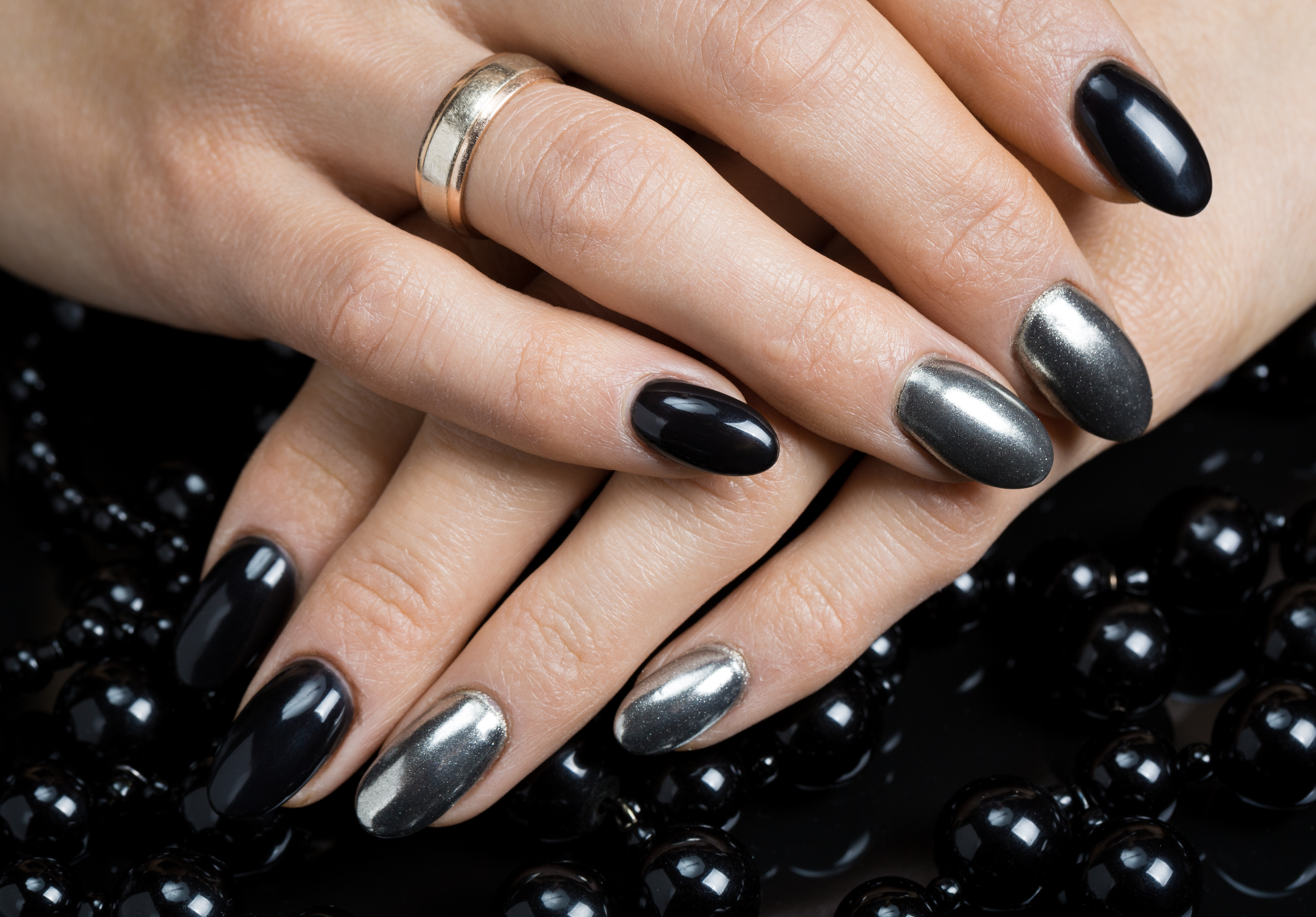
The metallic trend remains strong with silver nails created using matte finish polishes, quick dip and glitter infused acrylic powders and pressed glitters for everything from shimmer to high shine chrome finishes that will certainly be popular into the festive period and beyond.
Bubblegum pink is set to be HUGE in 2021, better yet if matched to pink lipstick of a co-ordinating bold statement.
Emerald green, especially when combined with graduated glitter or contrasting metallics like copper or rose gold will be everywhere in spring.
Vibrant shades of blue from royal blue to pastel blues.
Matching your nail shade to your face mask has also been an emerging trend that may continue into early 2021.
Natural nudes from beige to barely there pinks. The classic french tip over clear polish is also another more natural look growing in popularity. Negative space florals over nude shades or clear polish will also be another big look for Spring 2021.
Dark brown shades, especially when combined with tortoiseshell or cow print nail art will be a popular look for Autumn/Winter 2020 and into next year. Animal print in general will also be making a return to favour with leopard prints being a strong contender on nails.
Punk inspired looks from dark black and purple hues will be appearing towards Christmas and into the New Year. Overlaid with chunky crystal embellishments or gold leaf foil over a dark polish will be a key look. Monochrome will also do well over the next 6 months with black and white, nudes and silver touches expected to be in demand.
Geometric nail art continues to be a popular style with everything from patterns on just the tips to a ‘feature’ ring finger alongside neutral shades. Think linear designs in bold colours against softer, muted or pastel shades.
Quirky takes on classic French from a rainbow collection of pastel shades on nail tips only to glitter fades from free edge to centre of the nails. French will be back in a big way so now is a great time to start revisiting your skills in creating crisp smile lines.
Instagram inspired Nail Art for the brave…
Seashell nails as inspired by LA based nail artist Bana have been a huge hit on Insta. The look appears complicated but is actually very simple to create and certainly a talking point design for more open minded clients.
Rainbow nails with a plethora of colour or ‘anything goes’ nail art that is different on every nail will be very popular with celebrities into the Summer 2021.
Inspired by famous nail artist Unistella, instagram is on fire with crochet nails – crocheted designs from flowers to stars are adhered to the nail for an ‘out there’ nail look that is not for the faint hearted.
Products emerging…
Quick nail systems like quick dip powders and gel polish will be huge in 2021 as more clients seek faster appointments that are easier to wear and care for than traditional nail extensions.
17-Free products will also become much more readily available and sought after as more clients become conscious of the products they are using on their nails and seek healthier options.
Vegan friendly products will also grow in popularity in 2021 as more clients seek more ethical and conscious product choices.
Need to update your nail skills? Explore our Accredited Classroom based & Online Courses to get savvy and all set to take 2021 by storm…
We get so many calls from prospective students excited at the idea of jumping into a new career in beauty but totally unsure where to start – which treatments should they learn and which to offer first? Our wonderful team of Course Advisors are all fully qualified, experienced beauty professionals and have experienced the beauty sector first hand whether that was previously through working in salons, running their own beauty businesses or as beauty training professionals so they certainly know a thing or two about what sells to clients, what is in demand right now and how best to get started. Our blog this week focuses on how to decide which beauty treatments to learn, based on what is most in-demand with beauty clients right now…
The beauty market as it stands today…
Online demand for beauty products has surged in 2020 and Mintel predicts that value sales of beauty/grooming products through online sales will rise 24% to £1.9 billion in 2020. The beauty sector in general, has been predicted to grow by up to 21.1% up to 2022, that’s a huge number of beauty products being bought and treatments being delivered every single day and a huge amount of money being earnt by therapists all over the UK. With unprecented times seen in 2020 through the COVID pandemic and sadly some industries failing to bounce back, it is not surprising many people are looking for other career options and perhaps to follow long-held dreams of working in beauty.
Technology has evolved massively within the last 5 years with aesthetics being one of the largest growing sectors and with money being tighter for many, clients are also keen on treatments that give long lasting or multi tasking results allowing them to save time or money in other areas of their beauty regimes such as tinting, lash lifting (in place of extensions), spray tanning and facials like microdermabrasion giving flawless results that help reduce the need for daily make up application.
Lockdown also saw a huge number of clients getting into DIY beauty at home (and seeing some disasters unfortunately) that made them both appreciate the benefits of a professional but the perks of mobile treatments, with many clients still not feeling fully comfortable returning to salons as yet despite Covid-secure measures. This is great news for those starting out, helping to keep overheads down on premises or renting a room, mobile working also allows you to have flexible working hours or maximise your earnings working just part time around other employment.
The sectors of beauty…
Beauty can be broken down into reasonably separate treatment sectors:
Massage & holistic therapy
Skincare & aesthetics
Make up artistry
Nail technician services
Lash & brow services
Other general beauty (hair removal, spray tanning etc.)
Most beauty therapists will specialise in one or two of these areas of beauty, possibly offering the odd add-on treatment as demanded by their unique client base so picking the sector which most sparks your passion is the best starting point. Think about treatments you regularly receive already or beauty products that you can’t live without – bring this passion into your work and share it with others, all while earning a living.
Consider the options…
Think about how you want to train – do you prefer the idea of face to face courses, is that practical for you in terms of travel, childcare, work shifts etc.? We offer courses 6 days a week across 10 centres so there is likely to be training dates that work for you. These courses are fast track, typically delivered in 1 day so ideal for those who work long hours where longer term study may be tricky. Prefer to take more time over your learning, studying online at your own pace? It might be that our accredited online courses or Virtual Academy training is better suited to your needs – no attendance of the centre is required for these so they are great for those with caring commitments or who live too far from a centre. Our online courses are also budget friendly and accessible, starting at just £99 each. Classroom courses start from only £129.
Think about what is popular in your area – are there already a huge amount of lash technicians operating in your local area? Maybe you live round the corner from 2 or 3 nail bars. Remember there will always be business for a highly trained technician and other businesses simply signify there is demand but take your competition into consideration when deciding which treatments you start out with learning. Also think about your start-up costs in terms of kit and marketing. Online marketing through social media is free beyond your time and often very effective. A website is also a great investment, even just a free website building platform to get you started with an online presence. You’ll also need to think about where you’ll work. Do you have a spare room at home or are you going to work mobile in which case you’ll need a reliable car? Factor in any considerations like getting agreement from your landlord to work from home if renting or adding on use for work purposes on your car insurance policy.
Start realistically – book courses to learn one treatment you will specialise in to begin with or consider a package of suitable linked treatments that will allow you to offer popular treatment packages to clients to boost your earnings. Our Multi Buy Course Packages have all been carefully selected as treatments that work well as a business start-up opportunity and save you money on training in the long run also, versus booking each course individually. Remember we offer payment options to help spread the cost, including 0% credit through PayPal Credit on balances over £99.
Top treatments for 2020/2021:
Multi tasking treatments that deliver long lasting results that help your client cut down on additional product costs or treatments e.g. lash lift and tinting versus eyelash extensions, microdermabrasion and spray tanning to save on daily make up application, brow lamination and tinting over more expensive long-term treatments like microblading.
At home ‘spa’ pampering such as holistic massage therapies and luxury pedicures. Lots of people have had a difficult year and might not feel safe returning to salons or spas. Many are also put off the idea of gift vouchers at the moment due to lots of businesses folding in these difficult times taking the go-to spa voucher gift for Christmas off the list so now is a great time to advertise in your local area for your mobile holistic treatments to get the bookings rolling in.
Make up and hair up services – with wedding numbers capped, many are finding their wedding budget stretches slightly further to include a professional make up artist or to have more pre-wedding pampering. Take advantage of this as wedding bookings increase in 2021 and don’t forget to promote these services to ensure you get advance bookings. If make up is your passion, don’t be put off learning these skills because of the current restrictions on gatherings, now is a great time to train so that you are ready to take advantage of pre-bookings for 2021/2022 as the industry will soon bounce back in abundance.
Nail services that promote natural nail care such as gel polish or fibreglass and quick dip powder overlays to help strengthen natural nails, give long lasting colour and cut out the cost of nail extension maintenance. Typically overlay treatments like gel polish can last up to 3 weeks and usually attract a lower cost per service for clients than ongoing nail extension infills, removals and full sets. More clients are also feeling the rewarding benefits of having long, strong nails of their own rather than plastic tips, having got used to nail self-care during lockdown.
Facial skincare and aesthetics are only going to grow in popularity lead by celebrity trends for clear, flawless and minimal make up perfection. Everyone wants to look fresh and youthful and facial skincare is certainly moving with the times. To pursue training in more advanced aesthetics, a VTCT Level 2 and/or 3 in Facial Skincare or Beauty Therapy are usually the pre-requirements and there has never been a better time to start learning to enable you to progress into these advanced skincare careers.
Still unsure what training option is best for you? Feel free to get in touch with our team to discuss our courses further and get answers to any questions you may have that are stopping you from taking the first step towards your new career….


 Asymmetry: is it asymmetrical or does it have a jagged edge?